
Major shipping organizations issue guidance for safe Hormuz transits
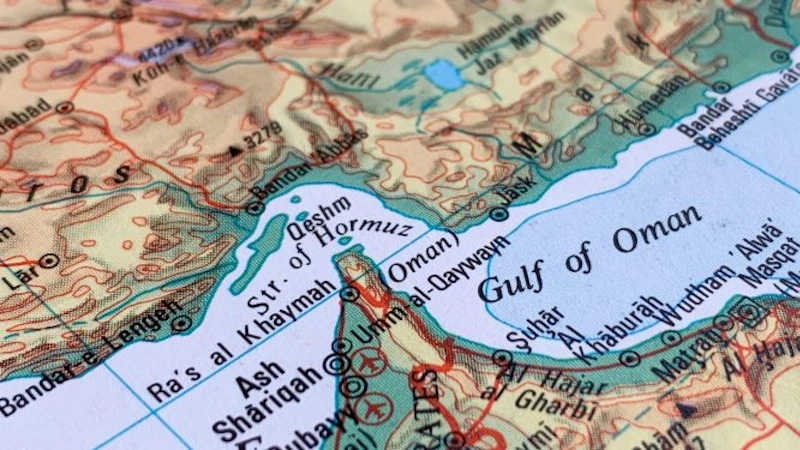
Industry organizations ICS, BIMCO, INTERCARGO, INTERTANKO, IMCA, and OCIMF have joined forces to issue the “Safe Management of Vessel Transit through the Strait of Hormuz” guidance, to help operators safely transit the area.
As stated, this guidance has been prepared to assist in planning and safely managing all vessel transits into, within, or out of the Gulf region where a transit through the Strait of Hormuz may be required during periods of heightened regional security risk. It should be read in conjunction with the latest version of the Best Management Practices for Maritime Security (BMP-MS).
Rather than a rigid go/no-go rule, the following structured decision aid is intended to assist companies and Masters in framing their transit decision. All five areas should be reviewed before committing to transit.
| Area of Review | Transit may be considered where… | Deferment should be considered where… |
|---|---|---|
| Threat picture | Official reporting is current, recent incident trends are understood and company risk assessment permits movement. | Confirmed kinetic engagement within last 12 hours, strike activity or mining concerns materially worsen exposure. |
| Navigation picture | Traffic density is manageable and reliable independent navigation methods are ready. | Traffic compression, CPA instability or electronic interference materially degrade safe navigation. |
| Vessel readiness | Bridge, engine, communications and emergency arrangements are fully ready. | Critical equipment is degraded or bridge-team readiness is insufficient. |
| Crew and security posture | Crew are briefed, rested and protective arrangements are in place. | Fatigue, welfare concerns or unresolved security posture issues remain. |
| Shore support | Office support, insurance confirmation, and emergency escalation routes are confirmed. | Shore-side decision support or insurance position remains unclear. |
Additional guidance as presented in the publication includes -but is not limited to- the following:
Guiding principles
- The safety of life, safe navigation and protection of environment remain the primary considerations, with Masters having overriding authority. Transit decisions should be based on fresh, continually updated voyage-specific assessments.
- The Master, Company Security Officer (CSO), shore management and Ship Security Officer (SSO) should maintain a shared and constantly updated operational picture before and during transit.
- Guidance should be drawn from official, trusted sources, including JMIC, UKMTO, MSCIO/EUNAVFOR, BMP Maritime Security, relevant military advisories, specialist security consultants and applicable Flag instructions.
- When based on the latest security threat assessment, should the risk be increased, then deferment of transit should be considered a safer option.
- Where applied to passenger vessels operating without passengers, the guidance should be interpreted in light of having reduced onboard personnel, albeit with unchanged safety and regulatory obligations.
- To support safe decision-making under pressure, recognize that human performance is affected by workload, stress, fatigue and environmental conditions. Transit planning and execution should aim to take into account the potential for “performance impacts” and put in place mitigation measures.
Current operating context
Conditions affecting merchant shipping in and around the Strait of Hormuz (SoH) can change rapidly. This environment may include kinetic threats, electronic interference, reporting uncertainty and periods of compressed, or unpredictable, traffic flow at various speeds.
AIS spoofing has been used by attackers placing fake AIS echoes in the vicinity of the course-line in an attempt to trigger course and/or speed changes desirable by the attackers. Visual and radar observations must be prioritized to effectively mitigate that risk.
Even when the SoH TSS waterway is open, operational conditions may be degraded by:
- GNSS jamming or spoofing.
- AIS anomalies and false target injection (AIS spoofing).
- Heavy traffic concentration and reduced decision margins within or near the Traffic Separation Scheme (TSS).
- Stress-driven maneuvering by surrounding vessels.
- Some vessels operating at low crewing levels with limited spare crew redundancy (fatigue and rest management), limiting quality of watch and efficiency of emergency response.
- Unmanned surface vessel (USV/WBIED) attack, combat swimmer sabotage and limpet mine threats against stationary and transiting vessels, small craft in attack or harassment mode.
- Errant mines not detected during original clearance ops.
- Missile/drone attacks including unexploded ordnance (UXO) hazards on board following drone or missile strikes.
- Shoreside stand-off weapon attacks.
- Intelligence, surveillance, and reconnaissance (ISR) by UAVs/quadcopters conducting surveillance of ports and anchorages.
These conditions may occur simultaneously, creating a high workload and high-stress operating environment. The combined effect of these factors can reduce the quality of situational awareness and its interpretation, with consequent impacts on communication and decision-making.
In such environments, situational awareness may erode, particularly where conditions are novel or rapidly changing, making it more difficult to recognize patterns and affecting both the speed and quality of decisions.
Transit planning must consider both security risk and navigational risk. Companies and Masters are strongly encouraged to maintain continuous situational awareness and to verify the complete threat picture immediately prior committing to transit.
Recommended planning considerations
#1 Threat and commercial
- Confirm the latest security threat assessment, recent incidents, and any current notices or advisories affecting the intended route.
- Consider the latest military advice.
- Review whether the SoH transit is necessary now, whether it can be delayed, or can be executed in a lower-risk time window.
- Confirm insurance cover and its specific extent, including war-risk cover, applicable listed areas, additional premium requirements, charterparty terms, and any operational conditions or warranties imposed by underwriters prior to committing a vessel to transit.
- Consider sanctions and trade-compliance exposure. The current operating environment includes States targeting ports and linked vessels, with reported enforcement activity on the open seas. Payments demanded for transit or port services may create sanctions or secondary-sanctions risk for the vessel, operator, and charterers. Companies should obtain appropriate legal advice if they consider that they have exposure.
#2 Vessel and technical readiness
- Review the vessel’s technical resilience – navigational sensors, steering arrangements, propulsion readiness, external communications, emergency power and other redundancies.
- Check the Vessel Hardening Plan against the latest threat and risk assessment.
- Maintain heightened state of watertight integrity. Ensure clear instructions exist for GNSS-compromised navigation. Refer to Annex I – GNSS Bridge Quick-Reference Card.
- Bridge teams, including lookouts, should participate in a GNSS signal loss drill at least once before transit. Findings and lessons learned should be evaluated and addressed by the Master on board and the company DPA/Nautical Manager ashore.
- The planning assumption must be total unavailability – or unreliability – of the GNSS signal for the entirety of the transit.
- Consider the availability of salvage capability in the area. Additional coverage or resource support should be sought if required.
- Purchase up-to-date paper charts as back-up for enhanced terrestrial navigation and position plotting, particularly if ECDIS is not fitted with the radar overlay. Confirm that Officers of the Watch (OOW) and the Master are proficient in position plotting on paper charts; ref. ICS Bridge Procedures Guide, 6th Edition.
- Review navigational charts to identify in advance any characteristic landmark(s), shore objects and fixed aids to navigation which will be used for independent position plotting by radar to verify the unreliable GNSS signal. Make sure bridge team is familiar with them and briefed accordingly, knowing what to expect during transit.
- Consideration should be given to installation of CRPA (Controlled Reception Pattern Antennas), where available, due to their increased resistance to GNSS jamming and spoofing.
#3 Crew and crewing
- Assess and confirm crew readiness, taking into account fatigue, welfare and psychological conditions and ensure compliance with applicable MLC and safety obligations.
- Consider disembarking non-essential personnel (trainees, cadets, shore workers, service engineers, riding squads, etc.) prior to transit.
- Ensure crew are aware of available support (BMP-MS Annex B helplines).
- Ensure any minimum crewing levels are tested and have sufficient redundancy to accommodate contingency situations and watchkeeping requirements.
- Carefully plan fatigue mitigation and rest hours management for the transit.
- Fatigue, psychological stress and other human factors should be treated as critical risk multipliers for all identified hazards, particularly during prolonged high-threat operations, as they may reduce the quality of situational awareness and the effective use of available information, with consequent impacts on communication and decision-making.
#4 Passage planning
- Ensure passage plan addresses all maritime security and navigational safety risks related to the SoH transit on the basis of the latest threat assessment and external advice received, including military advice and UKMTO recommendations on a coordinated transit, if received.
- The passage plan should support safe adaptation to actual conditions encountered during transit, recognising that real-time decisions may differ from planned assumptions and required adjustment based on prevailing conditions.
#5 AIS and navigational lights policy
- AIS policy should be set in accordance with flag, company and current official guidance.
- Active AIS may be a targeting factor. ISR UAVs collect positional data regardless. This risk, alongside SOLAS obligation, should be considered.
- If AIS is switched off, inform UKMTO and NAVCENT NCAGS of the vessel’s position every two hours, or as otherwise directed by authorities.
- Masters should make informed choices about AIS policy as per all available information and updated guidance, but they shall retain overriding authority under which, to the best of their professional judgment, safety of the crew, cargo, the ship and protection of the environment can be best ensured.
- Navigational lights must be shown in accordance with COLREGS at all times throughout the transit.
Source: safety4sea.com
